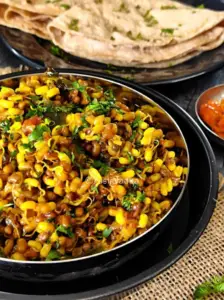
When you think of Indian fasting recipes, you might think of sabudana khichdi, fruits, or farali pattice. But if you’re looking for something traditional and a little different, Upvasachi Ratalyachi Bhaji—also called sweet potato sabzi—is a lovely recipe to try.
This simple Maharashtrian-style sweet potato sabzi is vegetarian, gluten-free, and made without onion or garlic. It uses steamed sweet potatoes, roasted peanut powder, cumin seeds, and green chillies for a sweet, nutty, and mildly spicy flavour. It’s an easy, beginner-friendly side dish for vrat or upvas, and it comes together in under 15 minutes once the sweet potatoes are cooked.

About Upvasachi Ratalyachi Bhaji
Upvasachi Ratalyachi Bhaji is a simple, wholesome dish that you’ll find in many Maharashtrian households during fasting days. This Maharashtrian sweet potato sabzi for vrat is made with steamed sweet potatoes, roasted peanut powder, and mild spices.
It is commonly prepared during Hindu fasting periods such as Ekadashi, Mahashivratri, and Navratri. The traditional version is cooked in ghee and seasoned with green chillies and cumin seeds. Roasted peanut powder, known as shengdanyacha kut, gives the sabzi a nutty flavour and a little texture.
This is a gluten-free recipe, and you can easily make it vegan by replacing the ghee with oil. With just two main ingredients—sweet potatoes and peanut powder—it’s a quick option when you need an easy sweet potato recipe for upvas or vrat.
The natural sweetness of the sweet potatoes balances the heat from the green chillies, while cumin and roasted peanuts add flavour and texture. The result is a comforting fasting sabzi that is simple but far from bland.
Sweet potatoes contain fibre, vitamin A, and antioxidants. If you are managing diabetes or another health condition, remember that portion size and individual dietary needs matter; follow the advice of your healthcare professional.
In This Post
What makes this sweet potato sabzi a fasting favourite?
Ratalyachi Bhaji is easy to prepare, uses familiar ingredients, and pairs well with other traditional fasting foods. It is often served with vari tandul, also called bhagar or samo rice, and upvasachi shengdanyachi amti (peanut curry).
You can enjoy it as part of a meal or have a small serving on its own when you want something comforting during vrat or upvas.
Ingredients for Ratalyachi Bhaji
Sweet potatoes — Cook the sweet potatoes in a pressure cooker or boil them in a saucepan. Once cooked, remove the skin and cut them into cubes.
Peanut powder (shengdanyacha kut) — Add 2 tablespoons of roasted peanut powder for a nutty taste and a little crunch. You can roughly crush roasted peanuts in a blender or use a mortar and pestle.
Cumin seeds and green chillies — Whole cumin seeds add aroma, while finely chopped green chillies bring a little heat to the sabzi.
Salt and sugar — Season the sabzi with salt and add 1 teaspoon of sugar to balance the flavours. Regular salt works well. If you are making this for upvas, you can use rock salt, also called sendha namak, if it is permitted in your fasting practice.
Ghee or oil — Traditionally, sweet potato sabzi is made in ghee. For a vegan version, use coconut oil, peanut oil, or another flavourless oil.
Frequently Asked Questions
Can I make sweet potato sabzi without peanuts?
Yes. If you are allergic to peanuts or prefer not to use them, skip the peanut powder and add sesame seeds or freshly grated coconut instead.
Which sweet potatoes should I use for Ratalyachi Bhaji?
In India, white-fleshed sweet potatoes with purple or pink skin are commonly used. They tend to be sweeter and softer. If you are outside India, orange-fleshed sweet potatoes can also be used.
Can I use rock salt instead of regular salt?
Yes. If you are making this for vrat or upvas, you can use rock salt, also called sendha namak, if it is allowed in your fasting practice.
How do I make sweet potato sabzi vegan?
Use coconut oil, peanut oil, or another plant-based oil instead of ghee.
What can I use instead of sweet potatoes?
You can make a similar sabzi with raw banana (kaccha kela), red pumpkin, or regular potatoes.
What goes well with Ratalyachi Bhaji?
A popular combination is vari tandul—also called bhagar or samo rice—with shengdanyachi amti, or peanut curry. You can also serve it with rajgira puri, farali kadhi, or plain curd.
What other sweet potato recipes can I make for vrat or upvas?
Sweet potatoes are versatile and can be used in several fasting recipes. Try Ratalyacha Kees, also called shakarkand upma. You can also make sweet potato halwa, sweet potato soup, sweet potato chaat, or sweet potato salad for upvas.
Variations
Ratalyachi Bhaji for Non-Fasting Days
If you are not making the sabzi for vrat, you can add curry leaves and mustard seeds to the tadka (tempering). Finish with chopped coriander leaves for a fresh flavour.
Masala Sweet Potato Sabzi
For a spicier version, add red chilli powder, coriander powder, and garam masala. These spices give the sweet potato sabzi a deeper, more masala-forward flavour.
Serving Suggestions
With Rajgira Puri
Ratalyachi Bhaji pairs especially well with rajgira puri. The puris make a satisfying accompaniment to the soft, sweet, and mildly spicy sabzi.
With Vari Tandul and Shengdanyachi Amti
Serve this sabzi as part of a traditional upvas meal with vari tandul (bhagar or samo rice) and shengdanyachi amti (peanut curry). It is a comforting combination for fasting days.
As a Snack
You can also enjoy this sweet potato sabzi on its own as a standalone snack. The soft sweet potatoes, nutty peanut powder, and mild spices make it a simple comfort food.
Storage Options
Sweet potato sabzi stays good in the refrigerator for up to 2 days. Store it in an airtight container and reheat it in a pan or microwave before serving.
Related Recipes
Latest Recipe Post
Maharashtrian Recipes
Breakfast Recipes
Snack Recipes
Diabetic-Friendly Recipes
Sabzi & Stir-Fry Recipes
No Onion No Garlic (Satvik) Recipes
Beginner-Friendly Recipes
Vegan Ebook
More Vrat (fasting) Recipes
Rajgira Puri (Amaranth Puffed Puri), Ratalyacha Kees (Shakkarkand Upma / Spicy Grated Potatoes), Sabudana Vada (Tapioca Fritters), Sabudana Khichdi, Farali Pattice (Kachori)
How to make Sweet Potato Sabzi Step-by-Step Recipe
Note:
If you are allergic to nuts, avoid adding peanuts, use freshly scrapped coconut and sesame seeds instead.
Looking for delicious vegan recipes? Don’t forget to check out My Vegan eBook – packed with simple, flavorful dishes to make your vegan journey effortless and delicious!
Join “Easy Indian Vegetarian & Vegan Recipes” on Facebook & be a part of our community.
If you like recipes like these, let’s connect on YouTube, Instagram & Facebook.
Thank you for stopping by, I would really love to know your thoughts on this recipe.
Also, do check out my Lifestyle Blog eralivine.com if interested.
Recipe Card
Ratyalyachi Bhaji | उपवासाची रताळ्याची भाजी रेसिपी | Sweet potato Sabzi
Ingredients
Method
- Wash the sweet potatoes under water and pressure cook them until 4-5 whistle.


- Once the sweet potatoes are cooled down remove the skin and cut them into medium bite-size cubes.


- In a pan add ghee and cumin seeds. When cumin seeds sizzles add green chillies and saute for 30 seconds.

- Now add the cubed sweet potatoes, salt, sugar and roasted peanut powder. Mix all the ingredients well.


- Cover the sabzi/vegetable with a lid and let the sweet potato cook on steam for 5-7mins on a low flame. Keep stirring occasionally.
- Upvasachi Ratalyachi Bhaji / Sweet Potato & Peanut Stir Fry Vegetable is ready.

- Preheat the oven to 350 degrees F. Coat the bottom of the baking tray with oil.
- Wash and peel the sweet potatoes. Cut them into medium size pieces and place them in the baking tray.
- Bake for 60 minutes or till they are cooked completely. Once cooked you can start with the tempering.