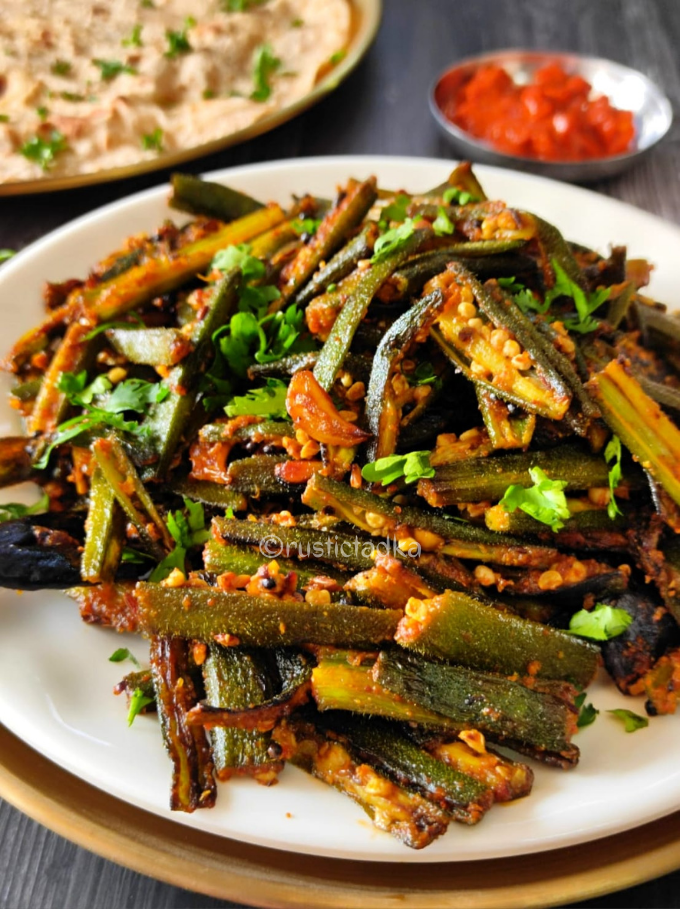
This Lahsuni Bhindi recipe is a simple Indian okra stir fry made with fresh bhindi, plenty of garlic, basic Indian spices, kokum and roasted peanut powder. The garlic gives the bhindi a bold flavour, while kokum adds a light tanginess and the peanut powder gives the sabji a slightly nutty finish.
Also known as Garlic Bhindi, this is the kind of everyday bhindi ki sabji that pairs beautifully with soft phulka, chapati, roti or bhakri. It can also be served as a side dish with dal-rice, sambar-rice or khichdi.
One of the biggest concerns when cooking okra is its sticky or slimy texture. In this recipe, completely drying the bhindi before cutting, cooking it uncovered and avoiding too much stirring helps keep the pieces separate. Kokum adds acidity as well as flavour, making this a particularly tasty way to prepare everyday bhindi.
Recipe Video
Your Guide to Easy & Tasty Indian Vegan Cooking

In This Post
What Is Lahsuni Bhindi?
Lahsuni Bhindi literally means bhindi flavoured generously with garlic. “Lahsun” means garlic in Hindi, while bhindi is the commonly used Hindi name for okra or lady’s finger.
In Marathi, bhindi is commonly called bhendi, and a simple okra preparation may be referred to as bhendi chi bhaji. This particular version combines bhindi with garlic, spices, kokum and roasted peanuts to make a dry-style sabji that works well with Indian flatbreads.
Unlike bhindi masala recipes that use a heavier onion-tomato gravy, this garlic bhindi sabji is relatively simple and allows the flavour of the okra and garlic to remain prominent.
Why You Will Love This Garlic Bhindi Recipe
This is a useful recipe for everyday meals because it requires only a handful of familiar ingredients and does not need a complicated masala.
Garlic gives the dish its distinctive flavour, while roasted peanut powder adds a mild nuttiness and helps give the sabji more texture. Kokum brings a gentle sour note that balances the spices and works especially well with bhindi.
Since it is a dry-style sabji, Lahsuni Bhindi is also a convenient lunchbox recipe. Once cooled properly, it can be packed with chapati, phulka or paratha for school or office tiffins without creating a lot of gravy or mess.
How to Make Bhindi Non-Sticky
If you have ever wondered how to make bhindi without it becoming sticky, the preparation before cooking is just as important as what happens in the pan.
Bhindi naturally releases a sticky substance when it comes into contact with moisture after being cut. That is why the first rule is to wash the whole bhindi and then dry it completely before chopping.
After washing, spread the bhindi on a clean kitchen towel and allow it to dry properly. You can also wipe each piece with a dry cloth or kitchen towel if needed.
Only cut the bhindi once it is completely dry.
Why Does Bhindi Become Sticky While Cooking?
The most common reason bhindi becomes excessively sticky is moisture. If freshly washed okra is cut while still wet, the exposed surfaces release more of their natural sticky substance.
Covering the pan while the bhindi is cooking can also trap steam and add additional moisture. For a dry bhindi ki sabji, cooking uncovered generally gives a much better texture.
Another mistake is stirring the bhindi constantly. Frequent stirring breaks the pieces down and can make the sabji more sticky. Toss gently only when needed and give the bhindi time to cook.
Tips for Perfect Non-Sticky Bhindi
Dry the Bhindi Completely
This is the most important step.
Wash the whole bhindi first and then dry it thoroughly before cutting. Even a small amount of water left on the okra can contribute to a sticky texture while cooking.
Use a Wide Pan
A wide kadai or frying pan gives the bhindi enough surface area to cook without becoming overcrowded.
When too much bhindi is packed into a small pan, it releases moisture and begins steaming instead of sautéing.
Cook Bhindi Uncovered
For this dry Lahsuni Bhindi ki Sabji, avoid covering the pan while the okra cooks.
Allowing steam to escape helps the bhindi remain more separate instead of becoming soft and slimy.
Avoid Over-Stirring
Bhindi does not need constant stirring.
Let it cook for a while before gently tossing it. Excessive stirring can break the pieces and increase stickiness.
Use Kokum for Tanginess
Kokum gives this garlic bhindi a mild sour flavour that balances the spices beautifully.
If you do not have kokum, other sour ingredients can be used depending on the recipe. Amchur or lemon juice can be added towards the end of cooking so they retain their flavour.
How to Choose Bhindi for Sabji
For the best bhindi sabji, choose fresh, tender okra pods that are bright green and firm without looking dry or shrivelled.
Smaller and medium-sized bhindi tend to be more tender. Very large or mature pods can sometimes become fibrous and contain harder seeds.
When shopping for bhindi, look for pods that feel fresh rather than limp. Tender bhindi cooks more evenly and gives this garlic okra stir fry a better texture.
Why Add Peanut Powder to Lahsuni Bhindi?
Roasted peanut powder adds both flavour and texture to this recipe. The mild nutty taste works particularly well with garlic, spices and tangy kokum.
It also helps give the otherwise simple bhindi sabji a little more body without turning it into a heavy masala.
Use coarsely ground roasted peanuts rather than turning them into a completely smooth powder. A little texture makes the final sabji much more interesting.
If you cannot use peanuts, you can simply leave them out or use a little freshly grated coconut for a different flavour.
Lahsuni Bhindi Variations
Lahsuni Bhindi With Onion
Thinly sliced onions can be added to this garlic bhindi recipe for a slightly sweeter flavour and additional texture.
Sauté the onions until they begin to soften before adding or combining them with the bhindi, depending on your cooking method.
Lahsuni Bhindi With Fresh Coconut
Freshly grated coconut works very well with bhindi and garlic.
Add a small amount towards the end of cooking so the coconut retains its freshness and does not become overly dry.
It is also a useful alternative when you want to make the recipe without peanuts.
Extra-Garlic Bhindi
If you love strong garlic flavour, increase the amount of chopped or sliced garlic slightly.
Sauté it carefully so that it becomes fragrant without burning. Burnt garlic can make the entire sabji taste bitter.
Spicy Lahsuni Bhindi
For a spicier version, increase the green chilli or red chilli powder according to your preference.
You can also finish the sabji with a small amount of freshly crushed chilli for a sharper flavour.
Lahsuni Bhindi Without Peanuts
The peanut powder is optional.
Simply omit it and prepare the bhindi with garlic, spices and kokum. The finished sabji will be slightly lighter but still flavourful.
How to Make Lahsuni Bhindi for Tiffin
Dry bhindi sabji is a good choice for a lunchbox because it does not contain a watery gravy.
The important thing is to let the Lahsuni Bhindi cool completely before packing it. Packing hot sabji immediately traps steam inside the container, which can make the bhindi softer and more moist by lunchtime.
Pack it with chapati, phulka or paratha for an easy office or school tiffin meal.
What to Serve With Lahsuni Bhindi
Lahsuni Bhindi With Chapati or Roti
The simplest way to enjoy Lahsuni Bhindi ki Sabji is with freshly made chapati, phulka or roti.
The dry texture of the bhindi works particularly well with soft Indian flatbreads.
Lahsuni Bhindi With Bhakri
You can also serve this garlic bhindi with jowar bhakri or bajra bhakri.
The rustic flavour of millet flatbread pairs beautifully with garlic, peanuts and kokum.
Lahsuni Bhindi With Dal Rice
Bhindi makes an excellent side dish with a simple bowl of dal and steamed rice.
Since dal-rice is soft and mild, the garlicky and slightly tangy bhindi adds both texture and flavour to the meal.
Lahsuni Bhindi With Khichdi
A dry bhindi sabji is also a good accompaniment to soft moong dal khichdi.
Add pickle, papad or curd on the side if you want to turn it into a larger meal.
Lahsuni Bhindi With Sambar Rice
The garlic and peanut flavours also work well alongside sambar-rice, particularly when you want to add a dry vegetable dish to the meal.
Common Mistakes When Cooking Bhindi
Cutting Bhindi While It Is Wet
This is one of the main reasons for excessively slimy bhindi.
Always wash whole bhindi first, dry it completely and only then start chopping.
Covering the Pan
Covering traps moisture inside the pan and can make dry bhindi sabji more sticky.
Cook uncovered unless your particular recipe specifically requires otherwise.
Stirring Too Frequently
Repeatedly stirring bhindi can break the pieces and release more of the sticky substance.
Let it cook undisturbed for short periods and toss gently when required.
Overcrowding the Pan
If there is too much bhindi in a small pan, the moisture has nowhere to escape.
Use a wide pan whenever possible so the pieces have enough room to sauté.
Burning the Garlic
Garlic cooks quickly.
Once it becomes too dark, it can taste bitter. Keep an eye on it while preparing the tempering and add the remaining ingredients once it becomes aromatic.
Can I Make Lahsuni Bhindi With Frozen Okra?
Fresh bhindi gives the best texture for this recipe, especially when you want a dry and non-sticky sabji.
Frozen okra naturally contains more moisture, so the texture may be softer. If using frozen bhindi, avoid adding additional water and cook it uncovered so as much excess moisture as possible can evaporate.
Do not expect frozen bhindi to have exactly the same texture as freshly cooked okra, but it can still be used when fresh bhindi is unavailable.
How to Store Lahsuni Bhindi
Lahsuni Bhindi tastes best when freshly cooked, while the pieces still have their ideal texture.
If you have leftovers, allow the sabji to cool completely before transferring it to an airtight container. Refrigerate and preferably use it the next day.
To reheat, warm the bhindi gently in a pan over low heat. This gives you better control over the texture than adding unnecessary moisture.
Avoid repeatedly reheating the sabji because the bhindi will gradually become softer.
Frequently Asked Questions
What is Lahsuni Bhindi?
Lahsuni Bhindi is a dry Indian okra preparation flavoured generously with garlic and spices.
Different recipes use different supporting ingredients. This version includes kokum and roasted peanut powder for additional tanginess and nuttiness.
How do I make bhindi without slime?
Wash the whole bhindi first and dry it completely before cutting. Use a wide pan, cook uncovered and avoid stirring continuously.
Keeping unnecessary moisture away from the cut okra is one of the most important steps for making non-sticky bhindi.
Why is my bhindi sticky even after drying it?
Even properly dried bhindi can release some natural stickiness while cooking.
The texture can become worse if the pan is overcrowded, if you cover it and trap steam, or if you stir it excessively. Give the bhindi enough space and allow the moisture to evaporate while cooking.
Can I use frozen okra for Lahsuni Bhindi?
Yes, although fresh bhindi usually produces a better dry-sabji texture.
If using frozen okra, cook it uncovered and avoid adding unnecessary liquid because frozen bhindi already releases additional moisture.
Can I make Lahsuni Bhindi with onions?
Yes.
Thinly sliced onions pair very well with garlic bhindi and add a mild sweetness and additional texture to the dish.
Can I make Lahsuni Bhindi without peanuts?
Yes.
The peanuts add nuttiness but are not essential to the recipe. You can leave them out or add a little freshly grated coconut instead if that suits your recipe.
What can I use instead of kokum in bhindi?
If kokum is unavailable, you can use a little amchur powder or lemon juice for tanginess.
These are best added towards the end of cooking so their flavour remains noticeable.
What is the best bhindi for making sabji?
Tender, fresh, dark-green okra works best.
Avoid very mature or fibrous pods whenever possible, as they take longer to cook and do not have the same soft texture.
Can Lahsuni Bhindi be packed for lunch?
Yes.
Because this is a dry-style bhindi ki sabji, it works well for lunchboxes. Allow it to cool completely before packing so condensation does not create excess moisture inside the container.
What goes well with garlic bhindi?
Garlic bhindi can be served with roti, chapati, phulka, paratha, jowar bhakri or bajra bhakri. It also works as a vegetable side dish with dal-rice, khichdi or sambar-rice.
More Indian Sabji Recipes
If you enjoy easy Indian vegetable recipes, you can also explore other everyday sabji and stir-fry recipes on Rustic Tadka.
Dry vegetable preparations like bhindi ki sabji are particularly useful for pairing with chapati, roti, bhakri or simple dal-rice meals and are convenient options for everyday home cooking.
Related Recipes
This Lahsuni Bhindi recipe is a simple way to turn everyday okra into a flavourful Indian side dish. Plenty of garlic gives the sabji its distinctive taste, while kokum adds a gentle tang and roasted peanut powder brings a nutty texture.
The most important part of making good non-sticky bhindi is managing moisture. Dry the okra completely before cutting, use a wide pan, avoid covering it and resist the temptation to stir constantly.
Once you get those basics right, this Garlic Bhindi ki Sabji becomes an easy recipe to make for everyday meals, lunchboxes and simple Indian thalis.
Serve it hot with chapati or phulka, enjoy it with bhakri, or add it alongside dal-rice or khichdi for a satisfying home-style meal.
More Stir Fry Sabji Recipes
Bharwa Bhindi (Stuffed Okra), Cabbage Besan Sabji, Aloo Gawar Sabji (Cluster Beans Sabji), Besan Shimla Mirch Sabji (Bell Peppers Stir Fry), Cabbage Chana Dal Sabji, Karela Sabji (Bitter Gourd Stir Fry), Pahadi Aloo Ke Gutke (Spicy Potato Fry), Garlicky Cabbage Potato Sabji
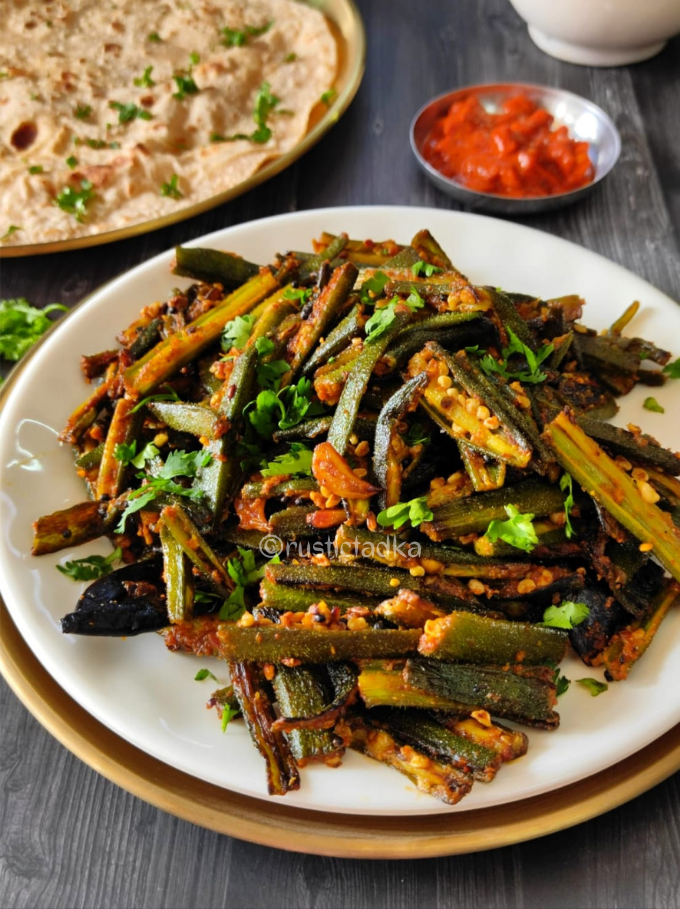
How to make lasooni Bhindi Ki Sabji
Note:
If you are allergic to peanuts, avoid them and instead use freshly grated coconut.
Looking for more delicious vegan recipes? Don’t forget to check out My Vegan eBook – packed with simple, flavorful dishes to make your vegan journey effortless and delicious!
Join “Easy Indian Vegetarian & Vegan Recipes” on Facebook & be a part of our community.
If you like recipes like these, let’s connect on YouTube, Instagram & Facebook.
Thank you for stopping by, I would really love to know your thoughts on this recipe.
Recipe Card
Lahsuni Bhindi Ki Sabji (Vegan Galicky Okra Stir Fry)
Ingredients
Method
- Wash and pat dry bhindi. Cut it lenghtwise.
- Heat oil in a pan, add mustard seeds and let them splutter.
- Add cumin seeds, let them sizzle for 15-20 seconds. Add sliced garlic cloves.
- Saute garlic for 30-40 seconds till they are lightly golden in colour.
- Add hing and turmeric powder. Mix well.
- Add the cut bhindi (okra) and mix bhindi well with the tempering.
- Add kokam petals (user 3 tsp tamarind pulp if you do not have kokam.
- Cook the bhindi uncovered till its almost soft. After 10-15 minutes of cooking bhindi till it's soft add the spices.
- Add red chilli powder, coriander powder, kitchen king masala. Instead of kitchen king you may also use garam masala powder.
- Add sugar and salt to taste. Sugar helps balance the taste of the sabji.
- Mix everything well so that the masalas coat the bhindi evenly.
- At this moment, after adding the spices, cover the pan just for 2-3 minutes so that the spices are nicely incorporated with the bhindi (okra).
- Soft and non-sticky lahsuni bhindi ki sabji is almost done. Lastly, add roasted peanut powder which adds a nice nutty taste and crunch to this garlicky bhindi sabzi. Mix well.
- Transfer lahsuni bhindi ki sabji into a serving bowl. Garnish with coriander leaves.
- Serve with soft phulkas, rotis or even as a side dish with dal rice, sambar rice or khichdi.n