Ever heard of pithla bhakri? It’s a much-loved comfort meal from Maharashtra, known for its simplicity, warmth, and bold flavours.
Pithla is an authentic Maharashtrian curry from the western region of India. It is a quick, easy-to-make dish with a unique texture and rustic taste.
This vegan, beginner-friendly, diabetic-friendly dish is traditionally served with millet bread like bhakri.
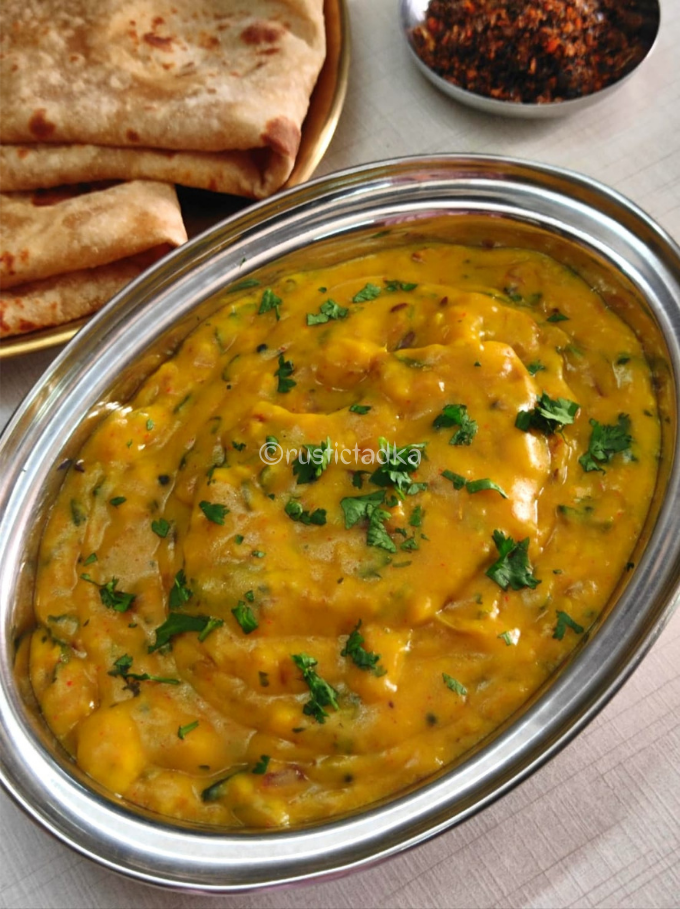
About Maharashtrian Pithla
Made using besan (gram flour) and onions, pithla is a protein-rich, gluten-free dish. It is commonly enjoyed with bhakri, raw onions, and spicy chilli thecha. What makes it special is how effortlessly it comes together—often in under 20 minutes.
A staple food in Maharashtrian households, pithla is prepared differently in every home. It can be served with plain rice, chapati, roti, or bhakri, depending on preference. Its thick, creamy, stew-like consistency makes it perfect to pair with both flatbreads and rice.
The dry version of pithla is called zunka, which is equally popular across Maharashtra. Zunka is often made by adding vegetables like cabbage, spring onions, or leafy greens such as methi.
Traditional pithla is prepared by sautéing finely chopped onions in oil, followed by adding a smooth besan paste and cooking it well. Despite using just a few basic ingredients, pithla is considered one of the most loved comfort foods in Maharashtra.
This is a highly versatile recipe that can be easily adapted to suit individual tastes. The Maharashtrian Pithla we are making today is flavoured with garlic, onions, coriander leaves, and spices. It tastes delicious when paired with jowar bhakri or steamed rice.
It’s a no-fail recipe for beginners and an excellent choice when you want something quick, wholesome, and satisfying. Apart from being easy to make, pithla is also healthy and budget-friendly—especially ideal for students or anyone living away from home.
While deeply rooted in Maharashtrian cuisine, pithla is also enjoyed across India and is sometimes served as street food with rice bhakri (tandlachi bhakri).
Pithla is best eaten hot, as its texture and taste change once it cools. Since most of the ingredients are pantry staples, it’s a go-to dish when vegetables are running low.
Tempered with mustard seeds, hing, cumin, garlic, green chillies, and sautéed spring onions, this dish brings back memories of childhood—especially when enjoyed with hot rice and lemon pickle on the side.
Though traditionally served with bhakri, pithla pairs equally well with chapati, paratha, or even bread.
Do try this authentic Maharashtrian pithla—it’s comforting, flavourful, and incredibly satisfying. A plate of garma-garam pithla with jowar bhakri, raw onion, and green chilli truly makes for a simple yet perfect home-style meal.
Your Guide to Easy & Tasty Indian Vegan Cooking
Frequently Asked Questions
Can Pithla be made in advance?
It’s best to serve pithla immediately but in case you want to make it in advance, store it in the refrigerator after it’s completely cooled down. Reheat before serving, adding a little water to adjust the consistency.
What are some variations of Pithla?
Adding vegetables like spinach (palak leaves), fenugreek leaves (methi), and tomatoes are some of the variations you can make while preparing pithla.
Is Maharashtrian Pithla a healthy dish?
Pithla is high in protein, which comes from gram flour. Adding vegetables like spring onions, fenugreek leaves, and palak leaves increases the intake of vitamins and minerals.
Can I use regular spring onions instead of regular onions in making Maharashtrian pithla?
Yes, you can use spring onions. The flavour will be slightly different.
How do you serve Maharashtrian pithla?
Typically, this Maharashtrian pithla is served hot with bhakri, roti or rice. This can also be paired with salads (koshimbir), chutneys and pickles.
Variations
Without Onion & Garlic: You can use tomatoes and curry leaves instead of onion and garlic; they give a distinct taste to pithla.
Without Garlic: Use only finely chopped onion for tempering. This kind of pithla is loved at our home.
Plain Pithla: A very basic preparation, that contains only the tempering of mustard seeds, jeera, hing, turmeric powder and besan (gram flour) paste. Season with salt and garnish with lots of coriander leaves.
Vegetable Pithla: You may add green leafy vegetables like methi, spring onions, and palak for that extra nutrition.
Serving Suggestions
With Bhakri (Millet Flatbread) – This Maharashtrian pithla pairs best with jowar bhakri (sorghum millet flour), bajra bhakri (pearl millet flour)
With Rice – You can serve this pithla with simple plain steamed rice or with jeera rice.
Others – This pithla can also be served with roti, phulka and bread.
Storage Options
Pithla is best enjoyed hot. You can store leftovers in an airtight container for up to two days. It tends to thicken as it cools, so add a few tablespoons of water before reheating in the microwave or on the stove.
Related Recipes
More Traditional Maharashtrian Recipes
Spring Onion Sabji (Zunka), Spring Onion Pithla, Valache Birde (Dalimbi Usal), Lal Bhopla Gharge (Sweet Pumpkin Puri), Bharli Vangi (Stuffed Eggplant Curry), Bhajani Vade (Thalipeeth Vade), Shimla Mirch Zunka (Shimla Besan Sabji), Kobhi Peeth Perun (Zunka), Alu Chi Patal Bhaji, Methi Chi Patal Bhaji, Alu Vadi, Kothimbir Vadi, Ukdiche Modak
How to make Maharashtrian Besan Pithla
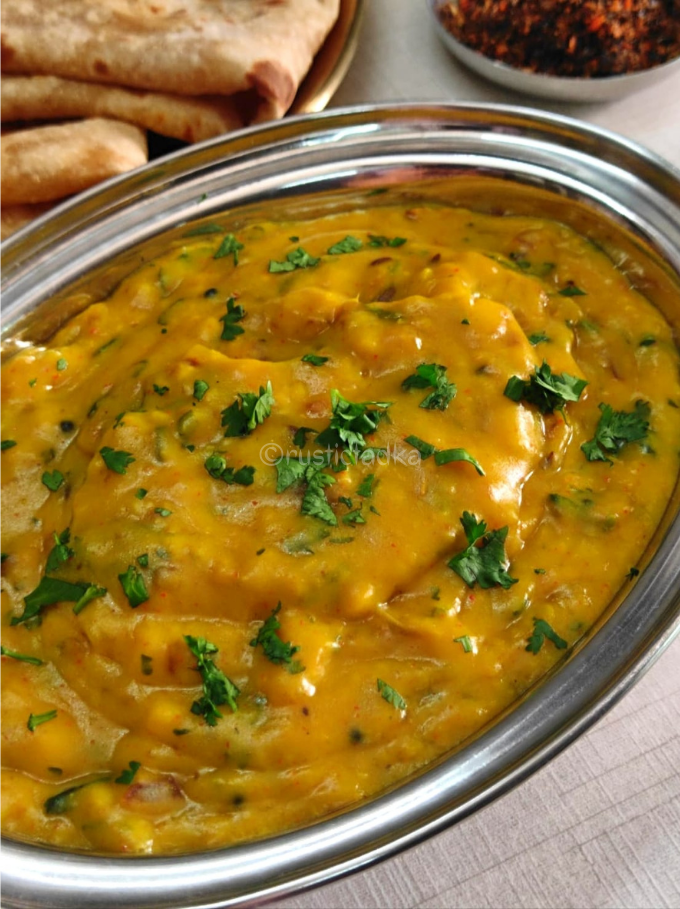
Looking for more delicious vegan recipes? Don’t forget to check out My Vegan eBook – packed with simple, flavorful dishes to make your vegan journey effortless and delicious!
Join “Easy Indian Vegetarian & Vegan Recipes” on Facebook & be a part of our community.
If you like recipes like these, let’s connect on YouTube, Instagram & Facebook.
Thank you for stopping by, I would really love to know your thoughts on this recipe.
Recipe Card
Maharashtrian Pithla Recipe | Besan Pithla | Pithla Bhakri Recipe
Ingredients
Method
- In a mixing bowl, add 5-6 tablespoons of Besan (Gram Flour)
- Add red chilli powder and turmeric powder. Mix the spices into the dry besan flour.
- Gradually start adding water to make a smooth, lump-free besan paste. I ended up adding 1 cup of water to make this besan paste. Keep this paste aside.
- In a thick bottom kadhai, heat oil. Once oil is hot, add mustard seeds and let them splutter.
- Add cumin seeds, hing, curry leaves and roughly crushed ginger-garlic paste.
- Saute this for about 30 seconds or til raw smell of ginger-garlic disappers.
- Now add finely chopped onions. Saute onions till they turn golden brown in colour.
- Once onions are cooked, add tumeric powder and finely chopped coriander leaves. Mix well.
- Add the besan paste. Keep the flame low and stir continously so that the mixture doesn't stick to the bottom of the pan.
- Gradually start adding water to adjust the consistency of this pithla.
- If serving with flatbreads like bhakri or chapati, best to keep the consistency little bit thick. With rice, thin consistency of pithla works best. So adjust the consistency accordingly.
- Add salt to taste. Mix well.
- Now, cover and cook this pithal for 6-7 minutes, stirring occasionally.
- Once pithla turns smooth and glossy, that the indication that besan is cooked perfectly.
- Delicious Maharashtrian Pithla is ready.
- Transfer into a serving bowl. Garnish with coriander leaves.
- Serve hot with bhakri, chapati or streamed rice.